
OnlyFans payment failures are rarely random. When a subscription declines once and clears on the next attempt, that is usually a bank-side hiccup. When the same charge fails month after month, the cause is almost always structural: a card type the processor rejects, a region where currency routing breaks, or a renewal date that lands inside a bank maintenance window. Because the platform has no built-in discovery feed, subscribers often find pages through ranking services, and those same services are where people first notice that certain pages keep declining while others clear without issue. BestOnlyFans, a comparison site that ranks public profiles by listed price, promotions, activity and media counts, keeps its data limited to what any visitor can see without logging in.
The practical result is that most repeat failures can be diagnosed from a small amount of record-keeping. Subscribers who write down the date, the card and the decline reason each time a payment bounces usually spot the pattern within two or three billing cycles. This article sets out the patterns worth watching, the tables that make them visible, and the changes that stop them.
Patterns versus one-offs
A one-off decline is a single failed charge followed by a successful retry on the same card, with no repeat the following month. A pattern is any failure that recurs with the same card, the same timing or the same stated reason. The distinction matters because the fixes are different: a one-off needs nothing beyond a retry, while a pattern needs a change to the payment method or the billing date.
The clearest signal is repetition within a narrow window. If three consecutive renewals fail on the same card, the card is the problem. If failures move with you across cards but stay tied to one page or one renewal date, the timing or the page itself is the problem.
| Signal | Good example | Poor example |
|---|---|---|
| Retry outcome | Charge fails once, clears on retry, no repeat | Charge fails, clears on retry, fails again next month |
| Card consistency | Failure follows one card across several pages | Failure follows one page across several cards |
| Stated reason | Same decline code appears twice in a row | Different codes each time with no common thread |
| Timing | Failures cluster at the same date each cycle | Failures land on scattered dates with no overlap |
| Price context | Failure continues after a promotional first month ends | Failure stops once the promotional period is over |
Reading the table row by row is faster than guessing. Two matching rows in the poor column are enough to treat the issue as a pattern rather than bad luck.
Failure log table
Nothing makes a pattern visible faster than a written log. The log does not need to be elaborate; four columns and a note are sufficient to expose repetition that memory alone would miss.
| Date | Card used | Decline reason | Outcome |
|---|---|---|---|
| Month 1, day 3 | Card A | Insufficient funds | Cleared on retry |
| Month 2, day 3 | Card A | Insufficient funds | Failed twice, then cleared |
| Month 3, day 3 | Card A | Declined by issuer | Subscription lapsed |
| Month 4, day 11 | Card B | None | Cleared first attempt |
In this example the log points to Card A and a single renewal date, and the switch to Card B on a different day resolves the issue. Without the log, the same sequence reads as four unrelated problems.
Card-related patterns
Card type is the most common structural cause of repeat declines. Prepaid cards, cards with no international use enabled, and cards that require per-transaction approval all fail more often on subscription billing than on one-time purchases.
The settings that matter most are international transactions, online payments and recurring billing permissions. A card can work perfectly in a shop and still fail on a subscription because one of those three is switched off.
- Prepaid cards with a fixed balance that runs down between renewals.
- Cards with international transactions blocked by default.
- Cards where recurring billing requires manual confirmation each cycle.
- Cards that expire or are reissued within the billing period.
- Virtual cards generated for a single merchant and then closed.
Checking those five items against the card in use removes the largest single category of repeat failures. Where a card cannot be changed, moving the renewal date is the next best option.
Regional patterns
Location changes how a charge is routed. A card issued in one country, a billing address in another and a currency that is not the card’s home currency can each trigger a decline, even when the balance is sufficient. Currency conversion is the usual culprit, because some issuers reject converted subscription charges while approving converted one-time purchases.
The order below works because it moves from the least disruptive change to the most disruptive. Most subscribers resolve a regional pattern before reaching the final step.
- Confirm the card’s home currency and compare it with the currency being charged.
- Enable international transactions if the issuer blocks them by default.
- Align the billing address on the card with the address on the account.
- Remove any travel or region lock applied by the issuer.
- If declines persist, switch to a card issued in the same region as the billing address.
Tip: When a charge fails, check the issuer’s app before retrying. Repeating a declined charge several times in one day can trigger a temporary block that outlasts the original problem.

Timing patterns
Renewal dates cluster with bank maintenance windows more often than subscribers expect. Many issuers run overnight maintenance and batch subscription charges at fixed times, so a renewal that lands inside that window can fail while an identical charge a few days later clears normally. A practical starting point is best only fans asian, which lists pages by the signals above.
Moving a renewal date is usually possible by cancelling and resubscribing later in the month. It is worth noting that when a creator raises the subscription price, auto-renew stops, and existing access lasts until the current paid period ends, which gives a natural moment to reassess the billing date.
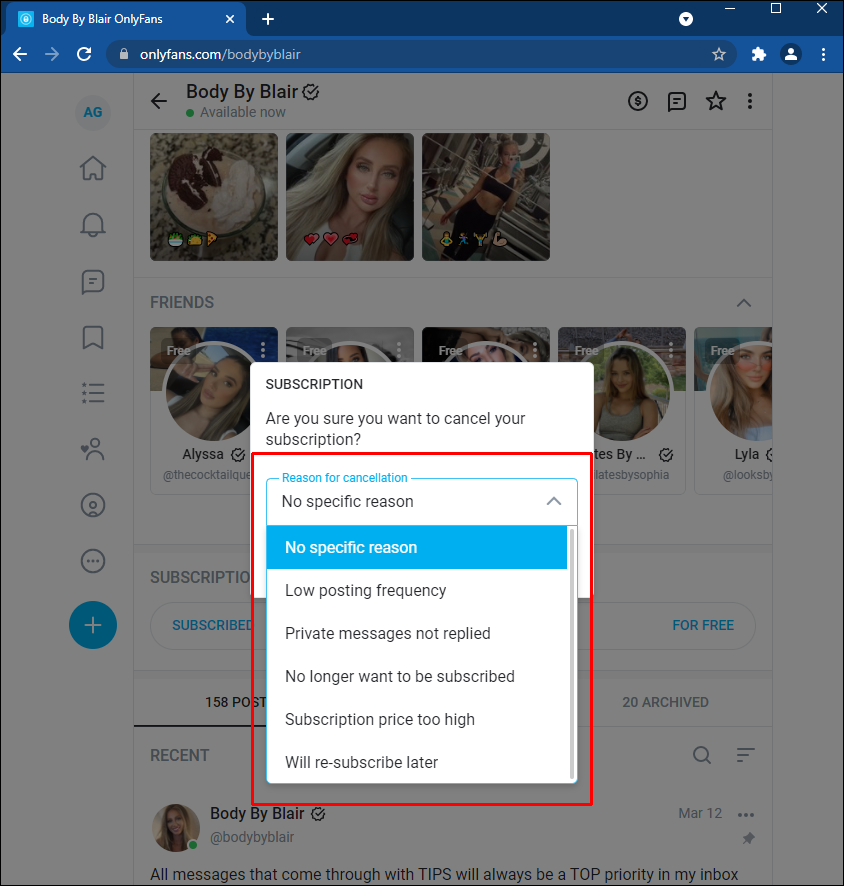
Costs are easier to plan once the monthly total is written down. Typical paid pages sit between $4.99 and $15, and averages fall in the $5 to $10 range, though the full spread of paid subscriptions runs from $4.99 at the minimum to $49.99 at the maximum. There is no base price below $4.99; only promotional first months may dip under it.
- One page at $4.99: about $4.99 per month.
- Two pages at $4.99 and $9.99: about $14.98 per month.
- Three pages averaging $7: about $21 per month.
- One page at the $49.99 maximum: $49.99 per month.
- Free pages: $0, with spending only through pay-per-view messages and tips.
Free pages earn differently because the price is set to $0. On those pages, spending depends entirely on pay-per-view messages and tips, so a declined subscription charge is not the issue; a declined pay-per-view purchase is.
Corrective steps
Breaking a failure pattern means changing the variable that causes it, not retrying the same charge. The changes below are ordered so that the simplest ones are tried first.
- Replace the failing card with one that permits recurring international billing.
- Move the renewal date away from the start or end of the month.
- Keep a small buffer above the subscription total so a converted charge does not exceed the balance.
- Enable two-step authentication so account changes do not interrupt billing.
- Remove cards that have expired or been reissued.
- Recheck the billing address after any change of address.
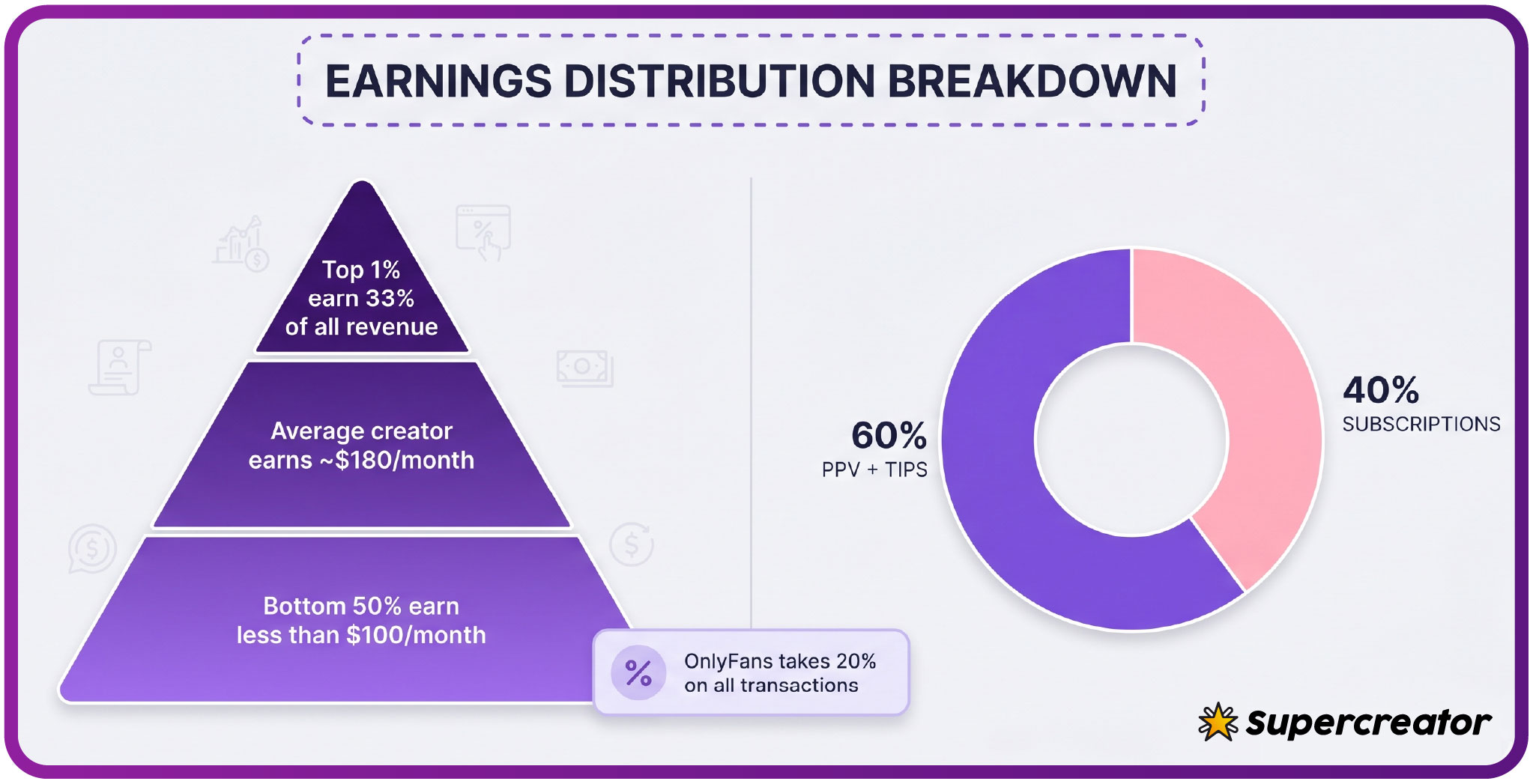
Two additional points apply across all cards. The platform fee is 20% on everything, including subscriptions, tips and pay-per-view, and the creator keeps 80%, so the amount charged to the subscriber is the full listed price rather than the creator’s share. That distinction matters when comparing a charge against an expected total.
It also helps to remember how the money is split between creators. A small number of pages account for a large share of revenue, while most earn modest amounts, which is one reason comparison services exist. A ranking service such as BestOnlyFans, which compares public profile prices, promotions, activity and media counts, gives subscribers a neutral way to check whether a page is active and what it currently lists, without promising anything about earnings.
A private browsing window limits what is stored locally, although it does not hide a charge.
Prevention habits
A short monthly review keeps payments clearing with very little effort. The review takes a few minutes and consists of checking the card list, confirming the renewal dates and reading the failure log for new entries.
Because the platform has no built-in discovery feed or directory, subscribers rely on outside lists to find pages, and those lists change often. A monthly review is also a natural moment to check whether a page is still active and whether its listed price has changed.
- Avoid retrying a declined charge several times in one day.
- Do not rely on a single card for every subscription.
- Do not ignore a promotional first month when planning the following charge.
- Do not leave expired cards saved in the payment list.
- Do not assume a one-off decline will not repeat.
Keeping the log current is the habit that does most of the work. Two matching poor-column entries are usually enough to justify a change before the next renewal date arrives.
BestOnlyFans refreshes its rankings every month.
FAQ
Why does the same card fail every month but work elsewhere?
Subscription billing uses different permissions than one-time purchases, so a card can clear in a shop while failing on a recurring charge.
Is there any way to pay less than $4.99 per month?
No. There is no base price below $4.99, and only promotional first months may dip under that figure.
What happens to access if a renewal fails?
Access continues until the current paid period ends; if the retry also fails, the subscription lapses at that point.
Does moving the renewal date fix timing-related declines?
Often it does, because it takes the charge out of the issuer’s overnight maintenance and batch window.