
OnlyFans offers two pricing structures: a paid page with a monthly subscription and a free page that charges nothing to follow. The labels sound simple, but the cost difference between these two tiers depends on how a subscriber actually behaves. This article examines the components that make up spending on each tier type and shows where a free page can end up costing more than a low-priced paid subscription. The comparison uses published platform facts, not guesses.
Most coverage of the platform treats price as a single number. That approach misses the pay-per-view messages, tips, and paid direct messages that sit outside the subscription. A subscriber who never buys extras spends far less than one who unlocks content weekly. The tier structure matters more than the headline price. Understanding the mechanics is the first step toward predicting your own monthly total.
TABLE of Cost Components by Tier Type
Both tiers rely on the same underlying mechanics. A free page sets the subscription price to $0 and earns through pay-per-view messages and tips. A paid page charges a monthly fee and can still sell the same extras. The table below lays out the components side by side so the comparison stays clear.
| Component | Free tier | Paid tier ($4.99-$15 typical) |
|---|---|---|
| Base monthly price | $0 | $4.99-$49.99, typical pages $4.99-$15 |
| Pay-per-view messages | Common main revenue source | Available, often priced higher than base |
| Tips | Optional, frequent prompt rate | Optional, similar prompt rate |
| Paid direct messages | Charged per message or per thread | Charged per message or per thread |
The table shows that a free tier removes only one line item. Every other spending route remains open. A paid tier adds a known base cost while keeping the same optional charges on top.
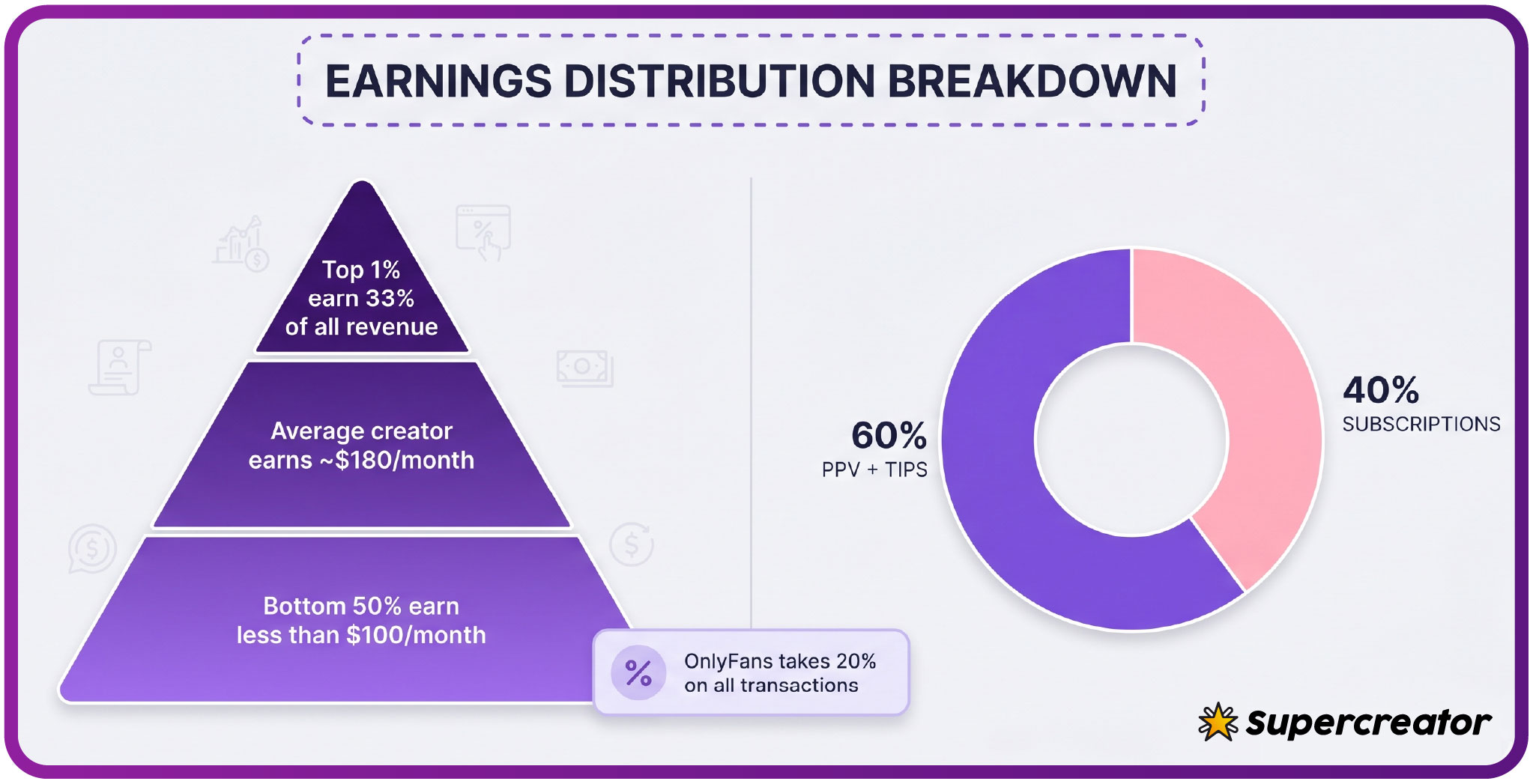
For the platform itself, the economics are identical. OnlyFans takes a 20% fee on everything, spanning subscriptions, tips, and pay-per-view, while the creator keeps 80%. That means the tier label changes who pays what, not how the platform settles the money.
The Base Price Illusion
A $0 label describes the entry point, not the total. Free pages still earn through pay-per-view messages and tips, so a subscriber sees unlock offers in the inbox. These offers arrive regularly, and each one carries a price. Skipping them is possible, but the prompt volume shapes the experience.
A low-priced paid subscription of $4.99 to $15 does something different. It moves spending into a predictable monthly figure. Typical paid pages cluster between $4.99 and $15, with an average in the $5 to $10 range. Subscribers can then decide separately whether to buy extras.
- Pay-per-view unlocks delivered as direct messages
- Tip requests tied to specific posts or milestones
- Paid direct messages charged per message or per conversation
- Bundled offers that combine several unlocks at a discount
- Promotional first-month pricing that dips below $4.99
None of those items appear on a price page. They live inside the inbox and the post feed. Because they are optional, heavy browsers can spend a large amount without noticing the total until a statement arrives.
A practical tip: before subscribing to any free page, decide a monthly ceiling for pay-per-view and tips, then track it. A $0 subscription with no ceiling is the easiest way to lose control of a budget.
One structural fact makes this worse for discovery. OnlyFans has no built-in discovery feed or directory, which is why ranking sites exist. Subscribers often land on pages without prior context, which raises the chance of impulse spending.

Pay-Per-View as the Real Price Tag
Pay-per-view does the heavy lifting on free pages. Each unlock has its own price, set by the creator, and heavy browsers unlock often. A single unlock looks small next to a monthly subscription. Ten to twenty unlocks across a month does not.
Paid pages also use pay-per-view, but the base fee already filtered the audience. That filter changes the prompt rate. On a free page, the creator has no subscription revenue to fall back on, so the message volume tends to be higher.
- Week one: a handful of unlock offers, small totals
- Week two: bundled offers and tip prompts appear more often
- Week three: paid direct messages start replacing some free replies
- Week four: renewals, milestone pushes, and end-of-month offers
This monthly shape repeats on many free pages. The pattern matters more than any single price. A subscriber who unlocks two or three items a week reaches a total that exceeds a low-priced subscription.
There is one more mechanic worth knowing. When a creator raises the subscription price, auto-renew stops, and existing access lasts until the current paid period ends. That rule applies to paid tiers only, since free pages have no recurring charge to interrupt.
Tips and Paid Messages
Tips are optional by design. In practice, they become routine for subscribers who follow a page closely. Prompts tie tipping to visible moments, which turns an optional action into a habit. The same logic applies to paid direct messages.
On a paid tier, the subscription anchors the relationship. Tips sit on top, but the monthly fee is already fixed. On a free tier, tips and paid messages carry the entire revenue load, so the prompt density is higher by necessity.
- Milestone posts asking followers to push a goal
- Limited-time unlocks with a countdown attached
- Reply priority for tipped or paid messages
- Custom request offers sent as direct messages
- Renewal reminders that include an extra purchase option
A subscriber who ignores all of these spends nothing beyond the base price. A subscriber who responds to even half of them adds a recurring cost that never appears on the tier label.
Cost comparison sites often rank free pages by activity level rather than by price. That approach has limits, since activity drives prompts and prompts drive spending. BestOnlyFans notes this pattern in its tier guides, and the observation holds across usage levels.
TABLE of Monthly Totals at Three Usage Levels
The numbers below are illustrative totals built from the documented price range and typical page averages. They show how the two tiers diverge as usage rises. Light use favors the free tier; heavy use does not.
| Usage level | Free tier, estimated monthly total | Paid tier, estimated monthly total |
|---|---|---|
| Light: browsing only, few unlocks | $0-$5 | $4.99-$15 base, plus $0-$5 extras |
| Medium: regular unlocks, occasional tips | $15-$30 | $4.99-$15 base, plus $5-$15 extras |
| Heavy: frequent unlocks, paid messages | $40-$80 or more | $4.99-$15 base, plus $20-$40 extras |
At the heavy level, the free tier total rises fastest. The paid tier still adds extras, but the base fee stays fixed and predictable. That fixed component is the practical difference between the two models.
The range for paid subscriptions runs from $4.99 at the minimum to $49.99 at the maximum. There is no base price below $4.99. Only promotional first months may dip under that floor, and the standard rate returns afterward.
Where Free Tiers Still Win
Free tiers are not a trap in every case. They win clearly for subscribers who browse without buying. The $0 entry point lets someone sample a page, read posts, and leave without a charge. No paid tier can match that flexibility.
They also win for occasional check-ins. A subscriber who visits once a month gains little from a recurring fee. The free model charges only when an unlock happens, which matches low-frequency use.
- Sampling a page before committing to a subscription
- Following several creators without stacking monthly fees
- Browsing once a month or less
- Testing whether a creator posts content you actually want
Paid tiers win in a different scenario. A subscriber who checks a page daily and unlocks regularly gets a predictable base fee instead of an open-ended tab. The average paid page sits between $5 and $10, which is less than a single week of steady unlocking on many free pages.
Matching the Model to Your Habits
The right tier follows the browsing pattern, not the label. Daily visitors with steady unlock habits do better on a paid subscription in the $4.99 to $15 band. Occasional visitors do better on a free page, provided they keep unlocks rare.
A short rule captures it: count your unlocks for one month, then compare that total against the paid page price you would consider. If the unlock total exceeds the subscription plus a small extras budget, move to the paid tier. If it stays below, the free tier is cheaper.
- Ignoring pay-per-view totals until the end of the month
- Assuming $0 means no spending at all
- Subscribing to many free pages and answering every prompt
- Forgetting that paid messages carry their own price
- Overlooking that a price increase ends auto-renew on paid tiers
These mistakes share one cause: treating the subscription price as the whole cost. BestOnlyFans recommends tracking the full monthly figure rather than the headline rate. The 20% platform fee applies to every charge, so the creator keeps 80% of whatever a subscriber spends.
None of this requires abandoning free pages. It requires matching the tier to actual behavior. A viewer who mostly reads posts pays nothing. A viewer who unlocks constantly pays less on a paid page, because the base fee replaces an unpredictable stream of individual charges.
The cost reality check comes down to volume. Free tiers reward restraint and penalize heavy browsing. Paid tiers reward consistency and cap the uncertainty. Comparing free onlyfans pakistan pages against paid options works best when the monthly total, not the entry price, drives the decision. BestOnlyFans refreshes its rankings every month.
FAQ
Is a free OnlyFans page really free?
The subscription costs $0, but pay-per-view messages and tips still carry prices, so spending depends on how often you unlock or tip.
What is the cheapest paid subscription?
The minimum base price is $4.99, and typical paid pages run from $4.99 to $15, with averages between $5 and $10. Only promotional first months may dip below $4.99.
Why does a free page sometimes cost more?
Free pages earn through pay-per-view and tips, so prompt volume is higher. Frequent unlocks can push a monthly total above a low-priced paid subscription.
What happens if a creator raises the price?
Auto-renew stops when the subscription price changes, and existing access lasts until the current paid period ends.